Technology changes quickly, but operational challenges are rarely solved by technology alone.
A maintenance team may need to reduce equipment downtime. A hospital may need better visibility across medical equipment and clinical operations. A facility-management company may be responsible for multiple buildings, contractors, assets, and service-level commitments. A commercial organization may need finance, procurement, inventory, HR, and operational information to work together rather than remain scattered across separate systems.
Solving these challenges requires more than developing software features.
It requires understanding how organizations actually operate.
This is the experience behind Steady Solutions, a Saudi technology company developing digital systems for operations and maintenance, enterprise management, healthcare, and facility management.
Steady Solutions has been developing its solutions since 1995 and today provides OMS, ERP, and HIS platforms for organizations in Saudi Arabia and the Gulf. The company reports implementations across more than 100 sites and more than 1,000 users.
Experience Built Around Real Operations
Operational software cannot be designed effectively from theory alone.
A work order may look simple on a screen, but in a real organization it can involve a service request, an asset, a technician, response-time requirements, spare parts, approvals, documentation, contractual KPIs, financial deductions, and eventually a payment certificate.
The same principle applies across other areas of an organization.
An asset failure can affect maintenance costs. An inventory shortage can delay repair. A delayed repair can affect availability. Poor documentation can affect contractual approval. In a healthcare environment, the consequences of unavailable equipment can extend beyond operational performance.
This is why Steady Solutions positions its experience around translating operational realities into practical digital systems rather than treating each department as an isolated software function. Its stated mission is to improve operational workflows, asset management, and data-driven decision-making while reducing operational complexity and risk.
More Than Three Decades of Solution Development
Steady Solutions traces the development of its systems back to 1995.
That history matters because enterprise technology has changed dramatically during that period.
Organizations have moved from local systems and manual processes toward cloud platforms, mobile applications, real-time dashboards, system integrations, automation, and increasingly AI-supported analytics.
Yet many of the underlying operational questions remain familiar:
- What work needs to be completed?
- Who is responsible?
- Which asset is failing repeatedly?
- Are preventive-maintenance activities being completed?
- Where are costs increasing?
- Are contractors meeting their obligations?
- Does management have reliable information to make a decision?
Steady’s experience has developed around answering these types of questions through increasingly connected digital systems.
Its current portfolio consists of Steady OMS, Steady ERP, and Steady HIS, supporting industrial operations, healthcare, facility management, and commercial enterprises.
4 Areas That Define Steady Solutions’ Experience
Over time, Steady Solutions’ systems have developed around several different but connected operational environments:
- Operations & Maintenance: Steady OMS supports assets, work requests, work orders, preventive maintenance, spare parts, contractors, projects, performance indicators, and broader operational processes.
- Enterprise Management: Steady ERP extends management across organizational areas such as finance, procurement, inventory, HR, sales, and enterprise operations.
- Healthcare: Steady HIS focuses on hospital information and healthcare operations, while Steady OMS can support the management and maintenance of medical equipment and clinical-engineering assets.
- Facility Management: Steady OMS supports organizations responsible for multiple sites, facilities, assets, service providers, contracts, maintenance activities, and performance requirements.
The value of this cross-sector experience is that operational problems are rarely limited to a single department.
Maintenance connects to procurement. Procurement connects to inventory. Assets connect to financial decisions. Healthcare equipment connects to clinical operations. Facility-management contracts connect operational performance to financial outcomes.
Experience in operational technology is not simply measured by how long software has existed. It is reflected in how well the system understands the processes, dependencies, and decisions behind everyday operations.
From Hospital Information Systems to Operations Management
Healthcare is an important part of Steady Solutions’ experience.
According to Steady Solutions, the company entered this area through Hospital Information Systems (HIS) before developing OMS capabilities, and that healthcare experience later influenced its specialized approach to operations and maintenance in sensitive healthcare environments.
This distinction matters because hospital operations are different from conventional building maintenance.
A medical asset is not simply another piece of equipment.
Equipment can have different levels of clinical importance. Maintenance priorities can depend on risk. Documentation may need to support accreditation requirements. Clinical engineering may involve equipment tracking, incidents, warranties, calibration considerations, operator-related issues, and specialized maintenance histories.
For healthcare organizations, the Steady OMS Exp plan includes capabilities such as clinical engineering, risk-based prioritization of high-risk equipment, equipment tracking, and quality indicators for user errors and misuse.
This demonstrates an important principle behind Steady’s broader approach: software should adapt to the operational context rather than force every industry into the same workflow.
Experience Across Industrial, Healthcare and Facility Operations
Different sectors measure operational success differently.
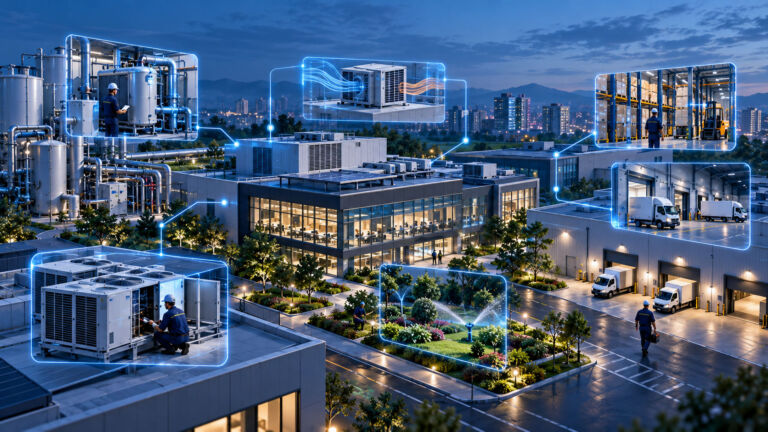
In an industrial environment, equipment availability, preventive maintenance, downtime, and spare-parts availability may be critical.
In facility management, the challenge can involve managing requests across multiple locations, measuring service-provider performance, maintaining contractual response times, and controlling budgets.
In healthcare, the operational environment includes medical equipment, hospital workflows, clinical engineering, and service availability.
Commercial enterprises may require broader integration between operational activity, finance, procurement, warehousing, HR, and other enterprise functions.
Steady Solutions currently identifies industrial operations, healthcare, facility management, and commercial enterprises as its four primary sectors in Saudi Arabia and the Gulf.
Working across these environments helps explain why the Steady portfolio has evolved beyond a single maintenance application.
One Experience, Three Connected Systems
Steady Solutions currently develops three primary systems: Steady OMS, Steady ERP, and Steady HIS.
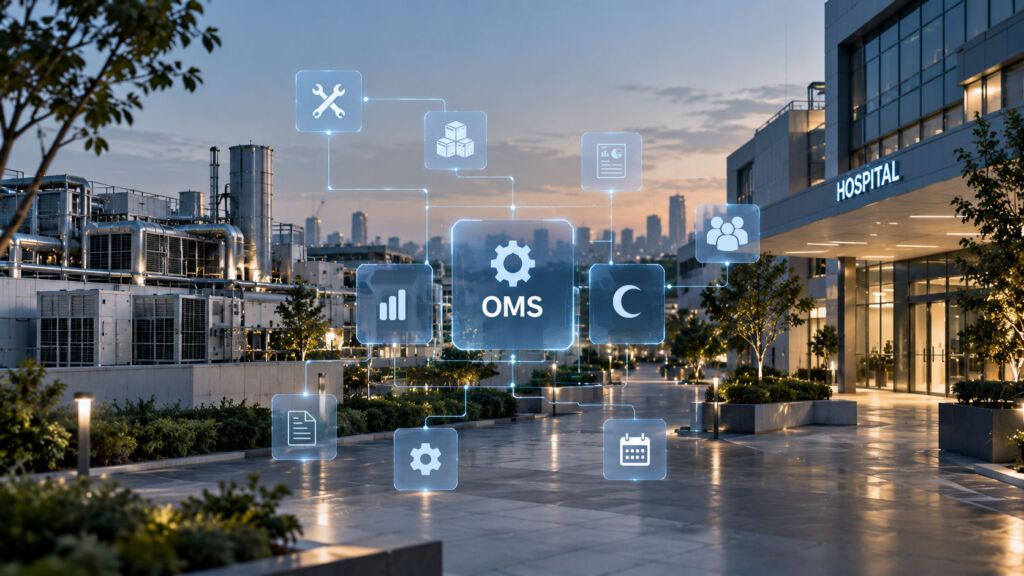
Steady OMS focuses on operations and maintenance, including assets, work orders, preventive maintenance, spare parts, operational KPIs, and related management processes.
Steady ERP expands the digital environment across wider enterprise processes.
Steady HIS addresses healthcare and hospital information requirements.
These platforms represent different operational needs, but they follow a common principle: converting fragmented processes and data into structured information that organizations can monitor and use for decision-making.
This approach becomes especially useful for organizations whose operational problems cross departmental boundaries.
Understanding the Field, Not Just the Dashboard
One of the biggest differences between theoretical software design and operational software is what happens outside the office.
- A technician may be standing in front of an asset.
- A supervisor may need to know why a work order is delayed.
- A warehouse team may need to determine whether the required spare part is available.
- A contractor may need evidence that work was completed.
- Management may need to understand why asset availability decreased.
- Finance may need supporting information before approving a payment certificate.
These are not simply software screens. They are parts of one operational chain.
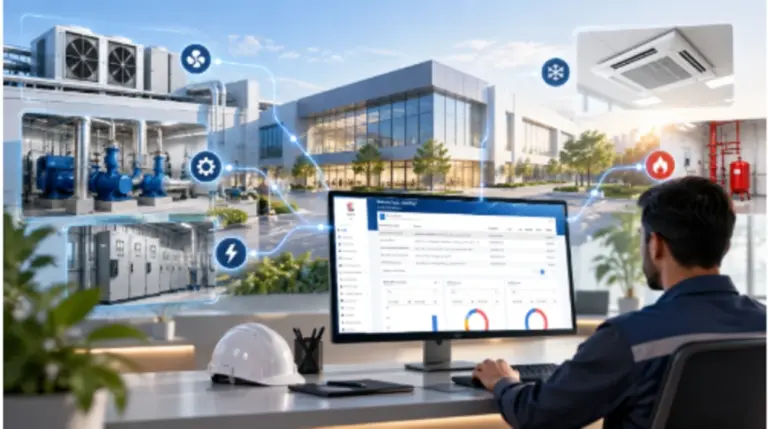
For example, Steady OMS is designed to electronically manage service requests and work orders from logging and classification through prioritization, assignment, execution, monitoring, approval, closure, and complete documentation.
Its wider scope also connects operations to projects, procurement, inventory, subcontractors, operating contracts, KPIs, and other facility-management processes.
That broader structure reflects an understanding that a maintenance department does not operate independently from the rest of the organization.
Turning Experience Into Measurable Information
Experience becomes more valuable when it can be converted into data.
Instead of relying only on experience stored in the minds of individual employees, digital systems can preserve operational knowledge through asset histories, work-order records, inspections, failure information, KPIs, documents, dashboards, and audit trails.
Steady OMS, for example, supports performance measurements including response and execution times, preventive-maintenance completion, repeated failures, asset availability, service quality, and other contractual indicators.
This creates continuity.
- When employees change, the asset history remains.
- When a manager needs to review performance, the operational record remains.
- When the same failure occurs again, previous information can be reviewed.
- When management needs to make a decision, it can use documented operational information rather than depending entirely on memory or disconnected reports.
Local Experience with Scalable Technology
Steady Solutions is based in Saudi Arabia and serves organizations across Saudi Arabia and the GCC. Its platforms are designed with full Arabic and English support, and its current solutions are cloud-based.
Local operational context also matters in areas such as cybersecurity, data management, language support, contractual structures, and organizational workflows.
For example, organizations in Saudi Arabia often need to consider applicable cybersecurity and data-protection controls, encryption, access management, audit logs, backups, business continuity, and in-Kingdom hosting when their policies require it. Steady OMS can be deployed on the web, in the cloud, or on an organization’s own network, with users choosing Arabic or English at login.
The goal is therefore not simply to provide technology, but to make that technology practical for the environment in which it will operate.
From Experience to Continuous Innovation
Three decades of solution development does not mean continuing to use the same approach.
Modern operations increasingly require mobile access, integrated data, APIs, real-time reporting, automation, and AI-supported analysis.
Across the industry, data analytics and AI are being applied to areas such as recurring-failure analysis, needs forecasting, request classification, delay detection, variance identification, summaries, and decision-support recommendations.
This represents the next stage of operational digitalization.
The foundation is still accurate operational data.
AI does not replace the asset register, work-order history, maintenance plan, or KPI. Instead, those structured records — such as the asset histories, work orders, and KPI dashboards maintained in Steady OMS — give analytics and AI something meaningful to analyze.
Building Systems Around Operational Reality
Steady Solutions’ experience can ultimately be understood through one idea:
technology should reflect how organizations actually work.
Since beginning solution development in 1995, Steady has expanded across operations and maintenance, enterprise management, hospital information systems, and facility management. Its current website reports more than 100 operational sites and 1,000 users, serving organizations across Saudi Arabia and the Gulf.
The value of that experience is not simply a number of years.
It is the accumulated understanding of assets, maintenance teams, hospitals, contractors, facilities, procurement processes, warehouses, projects, KPIs, financial controls, and the people who depend on those systems every day.
And that is what turns software from a collection of features into an operational system built around real business needs. To see how this experience comes together in practice, explore Steady OMS.
Frequently Asked Questions
What is Steady Solutions?
Steady Solutions is a Saudi technology company developing software for operations and maintenance, enterprise resource planning, hospital information systems, and facility management. Its primary platforms are Steady OMS, Steady ERP, and Steady HIS.
How much experience does Steady Solutions have?
Steady Solutions states that development of its solutions began in 1995, giving the company more than three decades of experience in operational software development.
How many sites use Steady Solutions?
Steady Solutions’ current website reports that its systems have been implemented across more than 100 sites and serve more than 1,000 users.
What industries does Steady Solutions serve?
Steady identifies four primary sectors: industrial operations, healthcare, facility management, and commercial enterprises.
What systems does Steady Solutions provide?
The company’s main product portfolio includes Steady OMS for operations and maintenance, Steady ERP for enterprise resource management, and Steady HIS for healthcare and hospital information management.
Does Steady Solutions have healthcare experience?
Yes. Steady Solutions states that its experience in the healthcare market began with Hospital Information Systems before OMS was developed, and that this experience is reflected in specialized capabilities for healthcare and high-sensitivity environments.
Is Steady Solutions designed for organizations in Saudi Arabia?
Yes. Steady Solutions is a Saudi-based technology company serving organizations in Saudi Arabia and the Gulf, with Arabic and English support and systems designed around regional operational requirements.