Managing a healthcare facility involves more than keeping equipment operational and buildings maintained. Hospitals, medical centers and multi-site healthcare organizations must also ensure that their physical spaces are used efficiently, maintained according to operational priorities and supported by reliable facility data.
A hospital may have fully occupied clinics while other rooms remain underutilized. Maintenance teams may respond quickly to equipment failures but lack a complete view of how those failures affect individual spaces.
This is where space management software becomes an important part of modern Computer-Aided Facility Management (CAFM).
By connecting space utilization, asset management, occupancy information and maintenance activities, healthcare organizations can make better-informed decisions about their facilities.
Steady OMS, developed by Steady Solutions, brings space management into an integrated CAFM environment, helping facility managers across Saudi Arabia improve visibility, coordinate maintenance and optimize the use of available space.
What Is Space Management Software in Healthcare?
Space management software is a digital solution used to organize, monitor and optimize the physical spaces within a facility.
In healthcare environments, these spaces may include:
- Patient rooms and hospital wards
- Outpatient clinics and consultation rooms
- Diagnostic and treatment areas
- Administrative offices
- Medical equipment rooms
- Storage areas and support facilities
- Shared spaces across hospital buildings
Unlike traditional space records that primarily document room names and locations, CAFM-based space management connects physical spaces with operational information.
This may include occupancy levels, assigned departments, installed assets, maintenance requests and work order histories.
The objective is not simply to know where a space exists, but to understand how it is used, what assets it contains and what operational activities are associated with it.
Why Space Management Matters for Hospitals in Saudi Arabia
Healthcare facilities operate in environments where space availability, equipment reliability and maintenance coordination can directly affect operational efficiency.
As hospitals expand and healthcare networks manage multiple locations, facility managers face several challenges.
Uneven space utilization: Some departments experience high occupancy while other spaces remain underused.
Disconnected facility information: Room records, equipment inventories and maintenance activities may be managed separately.
Limited maintenance visibility: Managers can see completed work orders without easily identifying the locations experiencing repeated maintenance issues.
Difficult capacity planning: Decisions about room allocation or facility expansion may be made without a consolidated view of actual space utilization.
Complex multi-site management: Healthcare organizations operating several buildings or facilities need consistent location structures and centralized reporting.
An integrated healthcare facility management software solution helps address these challenges by connecting physical spaces with operational and maintenance data.
How Steady OMS Supports Space Management Within a CAFM Environment
Steady OMS connects space information with assets, services, occupancy records and maintenance workflows.
Instead of managing buildings as isolated locations, facility teams can work with a structured digital representation of their facilities.
1. Build a Structured Facility and Space Hierarchy
Effective space management begins with organizing every physical location.
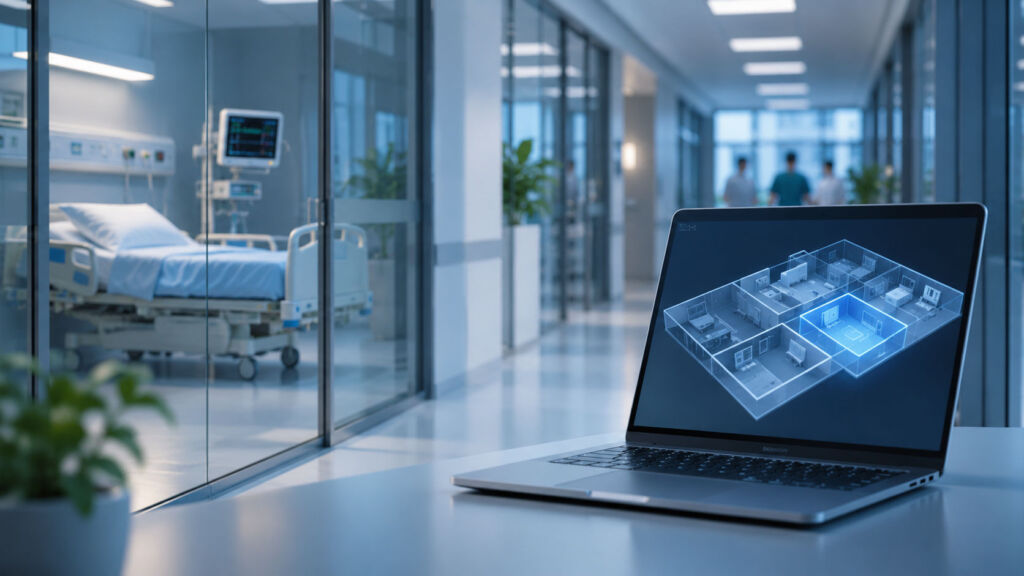
Steady OMS supports a hierarchical structure that can represent the relationship between sites, buildings, floors, rooms and individual spaces.
Facility hierarchy:
Site → Building → Floor → Room → Space
This structure allows organizations to maintain consistent location records across multiple healthcare facilities.
For example, a hospital network can organize locations by hospital site, building, clinical floor and individual treatment rooms.
Each space can then be associated with relevant operational attributes, according to the facility’s configuration.
A clear facility hierarchy helps maintenance teams identify locations, locate equipment and review activities within the correct physical context.
2. Connect Spaces with Assets, Services and Work Orders
One of the most valuable functions of integrated CAFM software is connecting space information to daily operations.
Steady OMS follows an operational relationship:
Space → Assets → Services → Work Orders
Each registered space can be associated with installed equipment, relevant services and maintenance activities.
For example, a diagnostic room may contain several technical assets requiring regular preventive maintenance.
When a maintenance request is generated, its location can be recorded within the system, allowing facility managers to understand where maintenance work is taking place.
This connection supports:
- Location-based asset tracking
- Preventive maintenance planning
- Corrective maintenance history
- Work order visibility by location
- Better coordination between facility and maintenance teams
- More informed analysis of maintenance activities across spaces
Rather than reviewing equipment and maintenance records in isolation, managers can examine their relationship to individual rooms and facility areas.
3. Monitor Space Occupancy and Utilization
Knowing how a space is allocated is different from knowing how effectively it is used.
Space occupancy and utilization data can help healthcare organizations identify differences between available capacity and actual space usage.
Within the space management capabilities of Steady OMS, occupancy information can be maintained and evaluated alongside facility records. Depending on configuration, occupancy data may come from manual records, operational information or supported integrations.
Facility managers can use this information to examine questions such as:
- Which clinical spaces are frequently occupied?
- Which rooms or areas are underutilized?
- Are high-use spaces receiving appropriate maintenance attention?
- Are existing facilities being used effectively before expansion is considered?
- Which locations require further operational review?
By combining occupancy information with maintenance records, organizations gain a more complete understanding of facility utilization.
4. Improve Maintenance Planning Using Space-Level Data
Traditional maintenance planning often focuses primarily on equipment condition, preventive maintenance schedules and reported faults.
These factors remain essential, but space-level data adds operational context.
For example, two rooms may contain similar equipment but experience different levels of usage.
A heavily utilized clinical area may require closer operational attention than a comparable space used less frequently.
When occupancy information and work order histories are available together, facility managers can assess maintenance activity in relation to space utilization.
This supports better decisions about maintenance priorities, resource allocation and recurring issues.
Maintenance teams can also review which locations generate frequent corrective work orders and determine whether further investigation is needed.
The result is a more informed approach to maintenance planning, based on both asset conditions and how facilities are used.
5. Support Space Allocation and Facility Planning
Space management is not limited to monitoring current conditions.
It also supports decisions about how existing facilities should be allocated and managed.
For healthcare organizations, space planning may involve:
- Reviewing underutilized rooms before requesting additional capacity
- Evaluating space requirements across departments
- Supporting room or department reallocation
- Assessing occupancy patterns during operational planning
- Understanding maintenance requirements before changing a space’s function
- Reviewing available space across multiple sites
Steady OMS helps bring relevant facility data into one operational environment, enabling managers to make more informed planning decisions.
Key Benefits of Space Management Software for Healthcare Facility Managers
Integrating space management with operations and maintenance can deliver several practical advantages.
| Benefit | Operational value |
|---|---|
| Improved space visibility | Understand room allocation and utilization across facilities |
| Better asset traceability | Connect equipment records to physical locations |
| More informed maintenance planning | Review work orders alongside space usage |
| Improved resource allocation | Identify spaces that may need additional attention |
| Greater operational accountability | Maintain location-specific maintenance histories |
| Better capacity planning | Evaluate existing space before making expansion decisions |
| Centralized multi-site oversight | Review facility information through a consistent location structure |
These benefits depend on the accuracy of facility records, the availability of occupancy information and the organization’s implementation configuration.
Example: Managing Space Utilization in a Multi-Site Healthcare Organization
Consider a healthcare organization operating several medical centers across Saudi Arabia.
One location has consultation rooms experiencing consistently high utilization, while another has several rooms used less frequently.
At the same time, the maintenance team receives recurring service requests associated with specific clinical areas.
Without connected systems, understanding these relationships may require reviewing separate occupancy reports, equipment inventories and maintenance records.
With an integrated space management and CAFM environment, facility managers can examine the locations, their associated assets, occupancy information and work order histories together.
This provides a clearer basis for evaluating room allocation, investigating repeated maintenance requirements and coordinating operational improvements.
This is an illustrative scenario, not a documented customer case study.
Space Management, CAFM and CMMS: How Do They Work Together?
Although the terms are related, they serve different operational purposes.
Space Management Software focuses on organizing physical areas, tracking their allocation and evaluating how effectively they are used.
Computer-Aided Facility Management (CAFM) provides a broader framework for managing facilities, physical spaces, assets and facility services.
Computerized Maintenance Management Systems (CMMS) focus primarily on maintenance operations, including work orders, preventive maintenance, asset histories and maintenance resources.
Steady OMS brings maintenance management and CAFM-related space capabilities together, enabling organizations to connect facility locations with assets, work orders and operational information.
For healthcare organizations, this integrated approach reduces the need to evaluate space and maintenance information as unrelated activities.
Frequently Asked Questions About Healthcare Space Management Software
What is space management software for hospitals?
Space management software helps hospitals organize, monitor and optimize rooms, clinical areas and other physical spaces. It provides information about location structures, occupancy, allocation and related facility assets, supporting better operational and capacity planning.
How does CAFM software support healthcare facility management?
CAFM software connects information about buildings, spaces, assets and facility services. It helps healthcare facility managers coordinate maintenance activities, improve space visibility and use operational data to support planning decisions.
Can Steady OMS connect hospital rooms with maintenance work orders?
Yes. Steady OMS supports location-based asset and work order management, allowing maintenance activities to be associated with registered facility locations and reviewed alongside related operational information.
Can space management software help identify underutilized hospital areas?
Yes. When accurate occupancy and allocation information is available, space management software can help facility managers identify areas with comparatively low utilization and assess whether reallocation or further operational review is appropriate.
Is Steady OMS suitable for healthcare organizations with multiple locations?
Steady OMS supports multi-site operations through structured facility records, asset management, maintenance workflows and centralized operational visibility. Its configuration can be aligned with the needs of individual hospitals or larger healthcare organizations.
Does Steady OMS combine CAFM and CMMS capabilities?
Yes. Steady OMS combines maintenance management functions, including work orders and preventive maintenance, with CAFM-related capabilities such as facility hierarchy, space management and location-based asset tracking. The available features depend on the selected plan and configuration.
Transform Healthcare Spaces into Better Operational Decisions
Effective healthcare facility management requires more than reliable equipment and completed maintenance tasks.
It requires a clear understanding of how buildings, rooms, assets and operational activities work together.
By connecting space management, occupancy information, asset tracking and work orders, Steady OMS helps healthcare organizations in Saudi Arabia improve facility visibility and make more informed decisions about maintenance, space allocation and operational resources.
For hospitals, medical centers and multi-site healthcare organizations, integrated CAFM and operations management software provides a stronger foundation for efficient facility operations.
Discover Space Management with Steady OMS
Looking to improve how your healthcare facilities manage spaces, occupancy, assets and maintenance activities?
Request a personalized Steady OMS demo to explore how its space management and CAFM capabilities can support your organization’s facility operations.