


Operations & Maintenance Management System (OMS) for Saudi Organizations
Steady OMS is a cloud-based operations and maintenance management system (CMMS) that helps organizations in Saudi Arabia manage assets, work requests, work orders, preventive maintenance and spare parts, and track maintenance KPIs in real time.




























What is Steady OMS?
Steady OMS is Steady Solutions’ operations and maintenance management system. It gives maintenance and operations teams one place to register assets, receive work requests, dispatch and close work orders, schedule preventive maintenance, control spare parts and purchasing, and measure performance with more than 75 KPIs, on the web and in the Steady OMS mobile app.
Who uses Steady OMS?
- Industrial operations that need higher equipment uptime.
- Hospitals and healthcare organizations that maintain medical equipment and clinical engineering assets.
- Facility management companies serving many sites and contracts.
- Commercial enterprises with facilities, fleets or equipment.
What problems does it solve?
- Unplanned breakdowns and long downtime.
- Preventive maintenance that is scheduled but not completed.
- Unclear maintenance, repair and spare-parts costs per asset.
- Slow response to faults and no record of who did what.
- Limited accountability for technicians and subcontractors.
Core modules
- Asset management, equipment tracking and index file
- Work orders and repairs, with work order priority classes and tolerance periods
- Preventive maintenance and maintenance program evaluation
- Stock control, purchasing and sub-contracts
- Project management and installation planning
- Operation module, quality assurance and KPIs, and cost control analysis
- Employee, service-provider and end-user satisfaction evaluation
- Live dashboards, charts and benchmarking, archiving, training and clinical engineering learning
OMS, ERP or HIS: which one do you need?
| System | Best for | Scope |
|---|---|---|
| Steady OMS | Maintenance and operations teams | Assets, work requests and work orders, preventive maintenance, inventory, contracts and maintenance KPIs |
| Steady ERP | Organizations that want one business platform | Everything in OMS, plus finance, sales and CRM, HR, procurement and warehouse management |
| Steady HIS | Hospitals and healthcare providers | Everything in ERP, plus patient flow and hospital performance indicators |
Learn more: What is an OMS? · OMS vs CMMS · MTBF and MTTR explained · Training Center
Index File

Asset Management
Work Orders & Repairs
Preventive Maintenance
Stock Control
Purchasing
Sub-Contracts
Project Management
Installation Planning
Operation Module
Training & Continuous Education
Quality Assurance & KPIs
Cost Control Analysis
Equipment Tracking
Employees Evaluation
Service Provider Evaluation
Maintenance Program Evaluation
End-user Satisfaction
Live Dashboard, Charts & Benchmarking
Archiving
Clinical Engineering Learning
Compare Plans
-
Index File
-
Asset Management
-
Work Orders & Repairs
-
Preventive Maintenance
-
Stock Control
-
Index File
-
Asset Management
-
Work Orders & Repairs
-
Preventive Maintenance
-
Stock Control
-
Purchasing
-
Sub-Contracts
-
All PROF features +
-
Project Management
-
Installation Planning
-
Operation Module
-
Training & Continuous Education
-
Quality Assurance & KPIs
-
Cost Control Analysis
-
Equipment Tracking
-
Employees Evaluation
-
Service Provider Evaluation
-
Maintenance Program Evaluation
-
End-user Satisfaction
-
Live Dashboard, Charts & Benchmarking
-
Archiving
-
Clinical Engineering Learning
Steady OMS Metrics & KPIs
Steady OMS dashboards turn maintenance and operations data into KPIs you can act on. Each group below lists indicators available in Steady OMS; open an item to see what it measures.
Quality Control
Monitors adherence to quality standards, user errors, and equipment failures.

Monitors adherence to quality assurance standards across operations.
Tracks the number of errors caused by operators during equipment usage.
Records and analyzes equipment-related incidents.
Tracks instances of improper equipment use, leading to potential damage.
Monitors missing equipment and its impact on operations.
Compares equipment downtime against productivity levels.
Measures the impact of failed preventive maintenance activities.
Tracks the frequency of failures for each piece of equipment.
Maintenance
Tracks equipment uptime, preventive maintenance, and maintenance costs versus equipment value.

Measures the maximum, minimum, and average time equipment is out of operation.
Tracks the effectiveness of preventive maintenance activities in preventing breakdowns.
Records all maintenance events, tracking repairs and service history.
Measures the average time equipment operates between failures.
Tracks the distribution of maintenance tasks among the workforce.
Compares maintenance costs against the overall cost of equipment.
Priorities and Safety
Prioritizes tasks, tracks risk factors, and ensures operational safety.
Categorizes tasks and issues by priority levels.
Assigns priority levels to work orders based on urgency.
Tracks the acceptable delay period before a task becomes overdue.
Assesses risk levels and power consumption in operations.
Projects
Measures project timelines, budget adherence, resource utilization, and customer satisfaction.

Measures the percentage of projects completed on or before the deadline.
Tracks the time remaining until project completion.
Compares scheduled hours against actual hours worked.
Monitors the percentage of available resources currently utilized.
Compares planned project costs against actual spending.
Measures customer satisfaction and loyalty based on feedback.
Tracks errors encountered during the project.
Records and analyzes customer complaints to improve services.
Purchasing & Procurement
Tracks procurement efficiency, on-time delivery, cost savings, and supplier performance.

Measures the percentage of deliveries received on or before the expected date.
Tracks the total time taken from placing an order to receiving goods.
Measures the difference between the expected and actual cost of purchases.
Tracks the time taken by suppliers to fulfill orders.
Monitors the percentage of goods rejected upon delivery.
Tracks the training and development of procurement staff.
Measures cost reductions achieved through procurement activities.
Operation Management
Monitors contract performance, budget adherence, supply chain efficiency, and risks.

Monitors the status and performance of contracts with clients.
Tracks budget adherence for ongoing contracts.
Monitors the flow of supplies and inventory levels.
Identifies high-risk areas that need closer management.
Centralizes data on various operational sites for quick analysis.
Benchmarking
Compares internal and external performance against industry standards for improvement.

Categorizes service providers or internal employees based on performance criteria.
Compares repair activities against preventive maintenance efforts.
Benchmarks employee performance against set standards.
Evaluates the performance of external service providers.
Operation
Monitors labor utilization, employee turnover, training rates, and support ticket management.

Tracks how effectively labor is utilized in operations.
Measures the rate at which employees leave the organization.
Monitors the percentage of employees absent from work.
Tracks the percentage of employees undergoing training.
Counts the total number of support tickets raised by employees.
Measures the average time taken to resolve support tickets.
Tracks the number of support tickets reopened after closure.
Measures the average operating time between equipment failures.
Tracks the average time taken to repair equipment and restore uptime.
Warehouse Management
Optimizes inventory processes, supplier performance, and warehouse utilization.

Measures the precision of inventory records compared to actual stock.
Tracks the time taken from order placement to delivery.
Measures the accuracy of picking the correct items for customer orders.
Tracks the percentage of goods returned by customers.
Monitors how effectively warehouse space is utilized.
Measures the frequency of inventory stock-outs.
Tracks the number of active suppliers for the organization.
Monitors the percentage of defective goods received from suppliers.
Rates supplier performance based on quality metrics.
Tracks the frequency of emergency purchases due to inventory shortages.
Measures the rate at which inventory is sold or used.
Monitors the risk of inventory becoming obsolete and unsellable.
Cost Management
Tracks asset costs, repair expenses, labor costs, and revenue growth.

Tracks the cost of acquiring and maintaining assets.
Monitors the decrease in asset value over time.
Measures labor costs associated with maintenance and operations.
Tracks costs incurred from repairing equipment.
Measures costs related to preventive maintenance activities.
Monitors the rate at which spare parts are used in operations.
Tracks the increase in revenue over time.
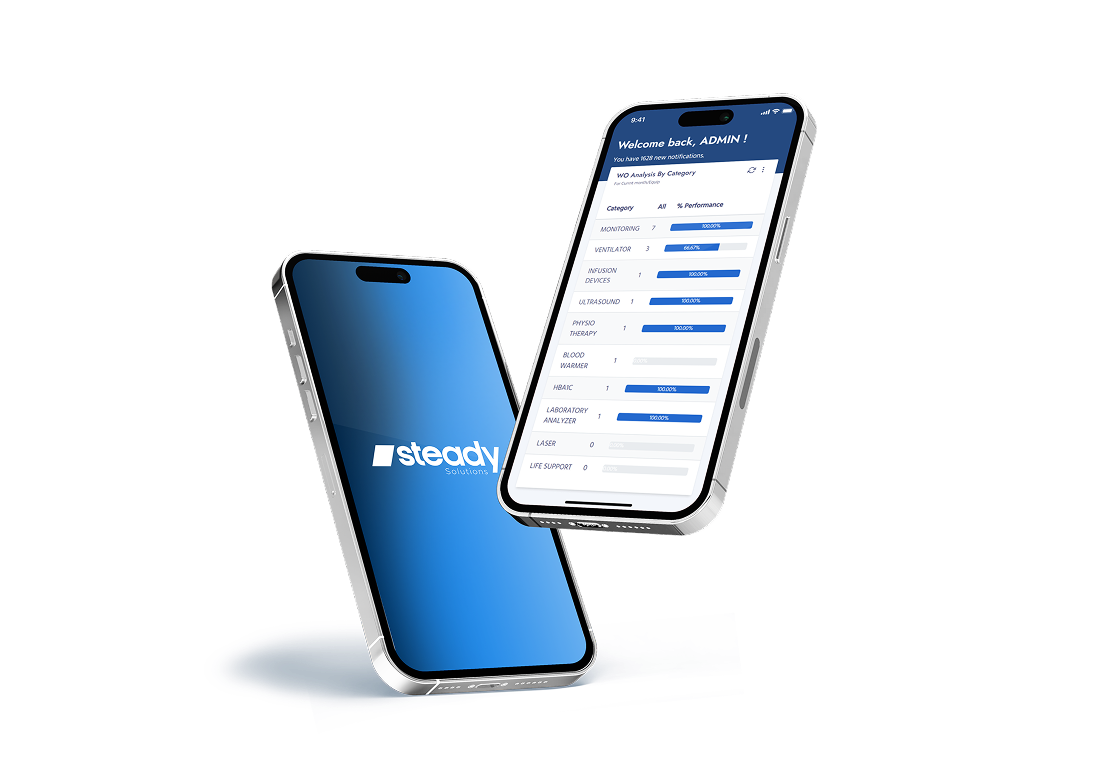
MOBILE
APPLICATION
(Members Only)
With the Steady OMS mobile application for iOS and Android, your team can access real-time data, monitor assets and manage tasks wherever they are.
From service requests and work orders to maintenance tracking, the app keeps your operations under control, including offline mode and voice input.



Explore system features
Download
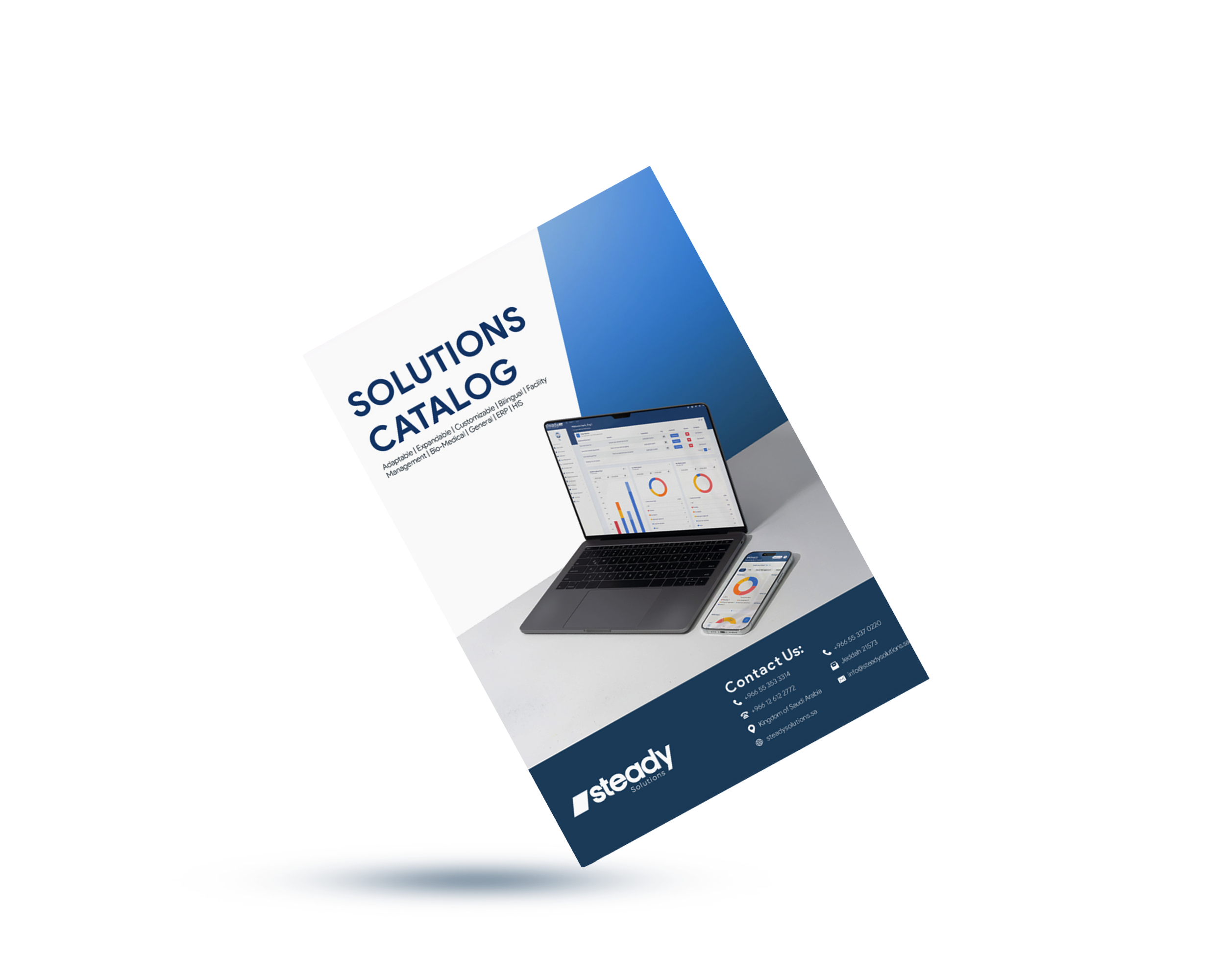
our catalog
Download our catalog to explore system features, capabilities and use cases across OMS, ERP and HIS.
Steady OMS: frequently asked questions
What is an OMS?
An operations and maintenance management system (OMS) is software that records an organization’s assets and manages the work needed to keep them running: work requests, work orders, preventive maintenance, spare parts, contracts and performance KPIs.
What is the difference between OMS and CMMS?
A CMMS focuses on maintenance jobs, assets and spare parts. An OMS includes those functions and adds wider operations management, such as contracts and budgets, projects, service-provider evaluation and multi-site benchmarking. Steady OMS combines both.
Who uses OMS software?
Industrial plants, hospitals and health organizations, facility management companies and commercial organizations use OMS software to manage equipment, buildings and maintenance teams.
How can maintenance software reduce downtime?
It makes preventive maintenance visible and trackable, prioritizes urgent faults, keeps spare parts available and shows which assets fail most often. Steady Solutions reports operational downtime reductions of up to 40% with its systems; results vary by site.
Is there a Steady OMS mobile app?
Yes. The Steady OMS app is available on the App Store and Google Play and supports service requests, work orders, notifications, offline mode and speech-to-text input.
We’d love to hear from you.